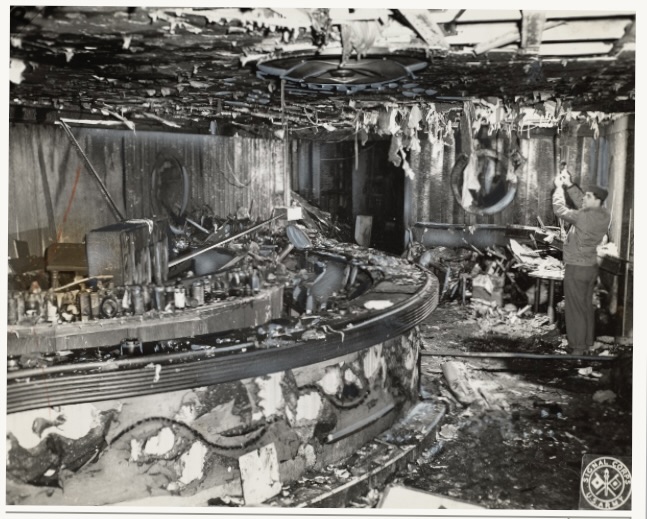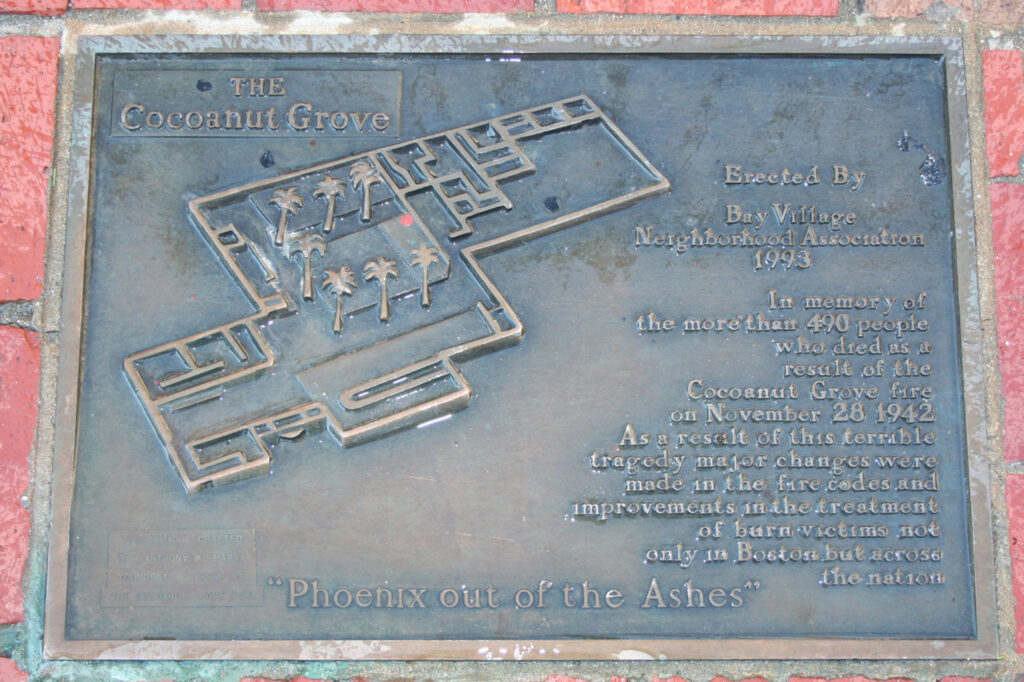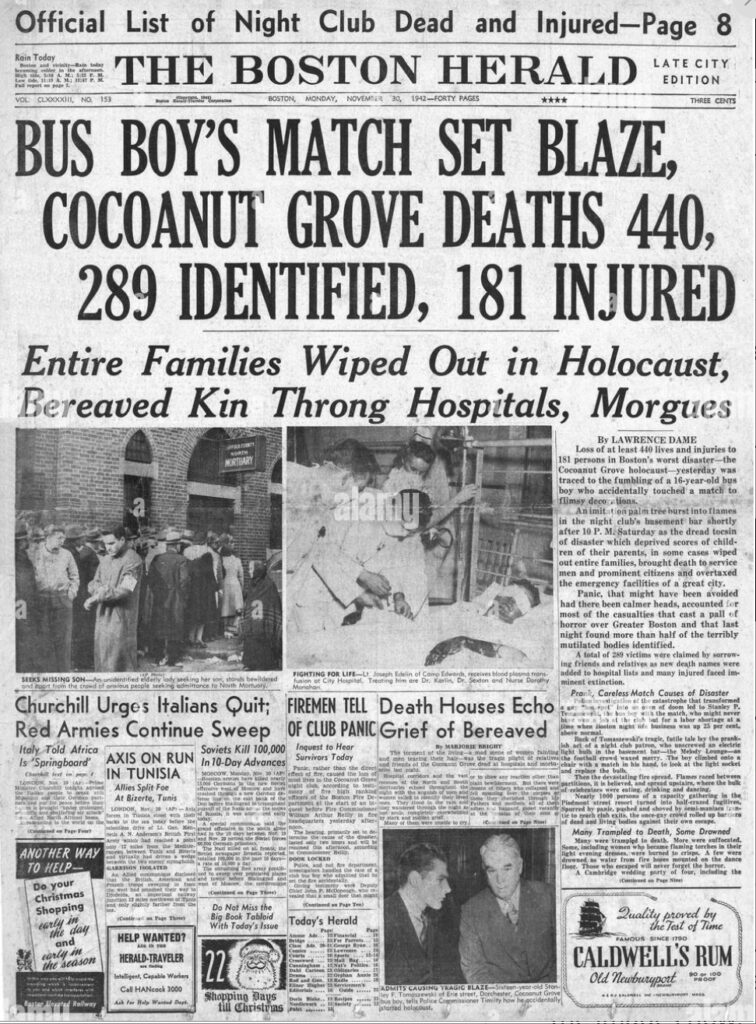
On the evening of November 28, 1942, Boston’s most glamorous nightclub, the Cocoanut Grove, became the scene of one of the deadliest fires in U.S. history. Within minutes, the popular nightspot was reduced to ashes, claiming 492 lives and injuring hundreds more. The disaster remains the deadliest nightclub fire ever recorded and one of the most influential events in shaping modern fire safety laws.
Located in Boston’s Bay Village, the Cocoanut Grove was known for its tropical-themed décor, celebrity guests, and ties to both politics and organized crime. Its owner, Barnet “Barney” Welansky, boasted of his connections to the Mafia and Mayor Maurice J. Tobin. Behind its glamorous façade, however, the club was a deathtrap—decorated with flammable fabrics, palm tree fixtures, and illegal structural changes. Exits were often locked or hidden to prevent customers from leaving without paying.
That Saturday night, the club was packed with over 1,000 people, far beyond its legal capacity of 460. The holiday weekend buzzed with energy as guests crowded into the Melody Lounge, a dimly lit basement bar adorned with paper palm trees and blue satin ceilings. Around 10:15 p.m., a small flame appeared among the decorations—possibly sparked by a match struck by a young busboy trying to replace a light bulb. Within moments, the blaze raced across the ceiling and up the narrow stairway to the main floor.
What followed was chaos. Thick smoke and fire engulfed every room within five minutes. Panicked patrons rushed toward the single revolving door, the club’s main entrance, which jammed under the crush of bodies. Other exits were bolted or concealed, trapping hundreds inside. Firefighters later found victims still seated at their tables, drinks in hand—overcome so swiftly that they hadn’t had time to move.
Emergency responders, already trained for wartime air raid drills, worked heroically through the freezing night. Local hospitals were overwhelmed, but their preparedness led to medical breakthroughs in burn treatment and blood transfusion, saving many who might otherwise have perished.
In the aftermath, Welansky was convicted of manslaughter for his negligence and served nearly four years in prison before dying of cancer shortly after his release. His actions—and the tragedy that followed—sparked sweeping reforms nationwide. New laws required that exit doors open outward, revolving doors be accompanied by regular exits, and flammable decorations be banned. The fire also led to improvements in emergency lighting, signage, and building inspection standards.